
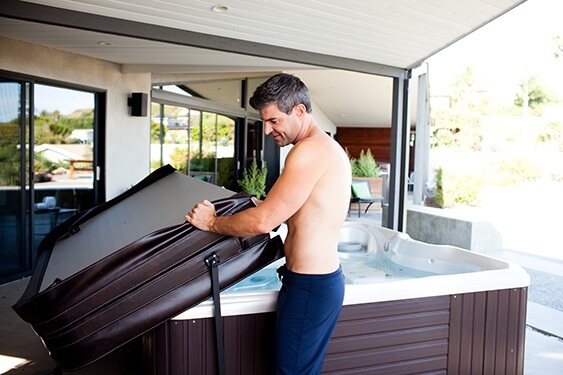
If you bought a hot tub and skipped the cover lifter, you already know why you're here. That cover is heavy, awkward, and the second your back tweaks once, you start using the tub less. A good cover lifter is one of the few accessories that pays for itself in actual use. A bad one warps your cover, scratches your cabinet, or gives out two seasons in.
I've spent years around hot tubs over the past 11 years and I see the same lifter complaints over and over. The honest take: you don't need to spend $400 on a name-brand lifter to get something that works. You also shouldn't buy the cheapest option on Amazon and expect it to last. There's a middle path, and the three picks below cover the three buying scenarios that come up the most.
Quick Picks
| Pick | Best For | Mount Style |
|---|---|---|
| REGMICS Pivot Top Mount | Most owners, simple and reliable | Top-mount, manual |
| The Cover Guy Hydraulic | Tight clearance, mobility issues | Side-mount, hydraulic |
| Cover Valet Cover Caddy | Renters, warranty concerns, no drilling | Undermount, gas spring |
What Actually Matters in a Cover Lifter
Before the picks, a few things worth knowing because the marketing copy on these products is mostly noise.
Mount style determines everything else. Top-mount lifters bolt to the lip of your hot tub cabinet and pivot the cover backward. They're the simplest design, the most universally compatible, and the easiest to install. Side-mount lifters bolt to the side panels of your cabinet and fold the cover in half against the back. Undermount lifters use a base plate that slides under the tub itself, no drilling needed. Each style has tradeoffs around clearance, cabinet compatibility, and how the cover stores.
Clearance behind the tub matters more than people realize. Most lifters need 18 inches or more of clear space behind the tub to operate. If your tub is tucked against a wall or fence, your options narrow fast. Measure before you buy. I've seen plenty of frustrated returns from people who didn't.
Cabinet material and corner radius matter. Top-mount lifters generally don't work on round tubs or tubs with corner radii larger than 9 to 12 inches. Cabinet material matters for screw retention. Cheap synthetic cabinets sometimes can't hold a top-mount lifter long-term, which is part of why undermount options exist.
Manual vs hydraulic is a real tradeoff. Hydraulic lifters feel great when they're new. The cover floats up like it's weightless. The catch is that gas struts are a wear part. They typically last three to five years before they start losing pressure, and replacement struts aren't always available for older models. Manual lifters have fewer moving parts and tend to outlive their hydraulic counterparts. None of this means hydraulic is wrong, just that you should know what you're signing up for.
"Fits most" usually means "fits most rectangular tubs up to 96 inches wide." Round tubs, swim spas, and oversized tubs need specific products. Always check the spec sheet against your tub's actual dimensions.
#1 Best Overall: REGMICS Pivot Top Mount Cover Lift {#best-overall}
If you have a standard rectangular hot tub up to 96 inches wide and at least 21 inches of clearance behind it, this is the lifter I'd point most owners toward. It's manual, which means no gas struts to fail in three years. The frame is double powder-coated aluminum, which holds up in actual outdoor weather instead of rusting like the cheap steel-frame versions you'll see for $80.
The pivot top-mount design is the most foolproof style. You attach two brackets to the rear lip of your cabinet, the lifter pivots the folded cover backward, and the cover sits behind the tub when you're soaking. The included three-hook towel rack is a small thing that you'll use every single time once you have it.
What works: Simple mechanics, durable aluminum frame, lift-and-lock design that one person can operate. Owners consistently report it makes daily cover removal a non-issue, which is the entire point. At its price point, it's hard to beat for value.
What to know going in: The instructions are not great. Plan to watch installation videos on YouTube before you start, and confirm your tub's corner radius is 12 inches or less. The included screws are functional but underwhelming. If you have heavier-duty mounting hardware on hand from a previous lifter, use those instead. You also need 21 inches of distance from any wall behind the tub for the cover to clear when folded back.
Skip this if: You have a round tub, a swim spa, less than 10 inches of clearance behind your tub, or a synthetic cabinet that can't hold screws well.
#2 Best Hydraulic: The Cover Guy Premium Hydraulic Cover Lifter {#best-hydraulic}
I'll be straight about this one: I'd point most people toward the manual REGMICS first. But there are real situations where hydraulic earns its place, and if you're in one of them, this is the hydraulic lifter I'd buy.
Hydraulic makes sense if you have limited mobility, a back issue that makes lifting awkward, a heavy commercial-grade cover (some can hit 50 to 70 pounds when waterlogged), or tight clearance where you need the cover to fold compactly rather than swing back. The Cover Guy is one of the few hydraulic brands on Amazon with actual hot tub industry roots rather than a generic Amazon listing from a seller you've never heard of. That matters because when a gas strut eventually fails, knowing the brand still exists and sells replacement parts makes the difference between a $40 fix and a $300 replacement.
What works: Lifts heavy covers with one finger when the struts are fresh. Side-mount design folds the cover compactly against the back of the tub, so you need less clearance than a pivot-style lifter. Adjustable for various tub sizes and cover thicknesses. Brand has actual customer service.
What to know going in: Plan on the gas struts losing pressure within three to five years of daily use, especially in cold climates where they cycle harder. Replacement struts run $30 to $60 a pair and are usually a 15-minute swap, but only if the brand still stocks them. The 3.9-star Amazon rating reflects this honestly. Owners love it for the first few years, then a chunk of the negative reviews are from year three onward when struts start to fade.
Skip this if: You have a budget under $200, a tub in a region with brutal winters where gas struts age faster, or no patience for eventual maintenance. Manual is just less stuff to fail.
#3 Best No-Drill Option: Cover Valet Cover Caddy {#best-no-drill}
This is the lifter I recommend in three specific situations: you're renting and can't drill into the cabinet, your tub is still under warranty and you don't want to risk voiding it with screw holes, or your cabinet is a thin synthetic material that won't reliably hold mounting screws.
The Cover Caddy works differently from the other two. Instead of bolting to your cabinet, it uses a base plate that slides several inches underneath the tub itself. The weight of the tub holds it in place. The lifter arm rises off the base plate, and a gas spring assists with lifting the cover off to the side. No drilling, no holes, no warranty risk.
It's made by Cover Valet, which is one of the actual original cover lifter brands in the industry, not an Amazon-only label. The five-year warranty is real and has a real company standing behind it.
What works: Genuinely no-drill installation. Works with round, octagonal, square, and cut-corner tubs, where most other lifters are rectangular-only. Gas spring makes the lift effortless. The under-mount design means it doesn't depend on your cabinet being structurally sound. Solid five-year warranty.
What to know going in: Yes, this is also a gas-spring (hydraulic) lifter, with the same eventual strut wear as any hydraulic system. The advantage over generic Amazon hydraulics is that Cover Valet stocks replacement parts, so when the strut goes, you can actually fix it. Installation requires 36 inches of rear clearance, which is more than the manual REGMICS needs. Some owners report needing to add a couple of stabilizing screws to the cabinet on heavier swim spa setups, which defeats the no-drill purpose, but for standard 6 to 8 person tubs the under-mount alone holds fine. It also costs more than the other two picks, which reflects the actual brand and warranty.
Skip this if: You have less than 36 inches of clearance behind your tub, you have an inground tub (it needs a portable above-ground tub to slide the plate under), or you're trying to spend under $250.
Installing a Cover Lifter
Most cover lifters take 30 to 90 minutes to install if you have basic tools and a second pair of hands. A few things worth doing before you start.
Drain the tub first if you're installing an undermount lifter. The base plate slides under much more easily when the tub is empty and you can rock it slightly. For top-mount and side-mount lifters, you can install with the tub full, but it's easier with the cover off.
Pre-drill your screw holes. The included screws on most Amazon lifters are not designed for tough cabinet materials. Pre-drilling reduces the chance of stripping or splitting your cabinet. If you have stainless steel deck screws on hand from another project, use those instead of the included hardware.
Watch the manufacturer's video before you start. The printed instructions on most of these products are translated and minimal. There's almost always a YouTube installation video that's clearer.
Test the lift cycle a few times before you finalize the bracket positions. Most top-mount lifters have some adjustment range, and getting the cover to sit cleanly when folded saves you from making new holes later.
Frequently Asked Questions
How much does a hot tub cover lifter cost?
Most cover lifters land between $130 and $400 on Amazon. Manual top-mount lifters are at the lower end, hydraulic and brand-name undermount lifters at the higher end. Anything under $100 is usually generic steel-frame product that will rust within a year or two outdoors.
Are hydraulic cover lifters worth it?
For most owners with a standard cover and no mobility issues, a manual lifter does the job for less money and lasts longer. Hydraulic lifters are worth it if you have a heavy commercial-grade cover, a back or shoulder issue that makes lifting hard, or tight clearance where you need the cover to fold compactly rather than pivot backward.
How long do cover lifters last?
A well-built manual lifter with an aluminum frame should last 8 to 12 years outdoors with minimal maintenance. Hydraulic lifters typically need new gas struts every three to five years, but the frame itself can last just as long as a manual unit if it's quality construction.
Can I install a cover lifter myself?
Yes. Most cover lifters are designed for DIY installation with basic hand tools. Top-mount and side-mount lifters take 30 to 60 minutes. Undermount lifters take longer because of the need to position the base plate, but don't require drilling. Having a second person makes any install easier, especially for handling the cover during test cycles.
Do cover lifters work with all hot tubs?
No. Most lifters are designed for rectangular tubs up to 96 inches wide with corner radii of 12 inches or less. Round tubs, oversized tubs, and swim spas need specific products. Tubs with heavily curved cabinets may not have a flat surface for top-mount brackets. Always check the lifter's spec sheet against your tub's actual dimensions before buying.
Will installing a cover lifter void my warranty?
It depends on your manufacturer. Some manufacturers void cabinet warranties if you drill into the cabinet without using their approved lifter. Others don't care. If your tub is still under warranty, check your manual or call the manufacturer before drilling. An undermount lifter like the Cover Caddy avoids the issue entirely since it doesn't require drilling.
The Bottom Line
If you have a standard rectangular tub and reasonable clearance, the REGMICS Pivot Top Mount is the right lifter for the most people. It's the best balance of cost, durability, and simplicity.
If you specifically need hydraulic assist for a heavy cover or a back issue, the Cover Guy Hydraulic is the version of that I trust most on Amazon, with the honest tradeoff that you'll be replacing struts in a few years.
If you can't or shouldn't drill into your cabinet, the Cover Valet Cover Caddy is the cleanest no-drill option from a real industry brand with real replacement parts.
Whatever you pick, measure your clearance and corner radius first. Almost every bad cover lifter review on Amazon is actually a fit problem, not a product problem.
Hot Tub Hunt is reader-supported. When you buy through links on our site, we may earn a small affiliate commission at no extra cost to you. We only recommend products we'd actually buy ourselves.