
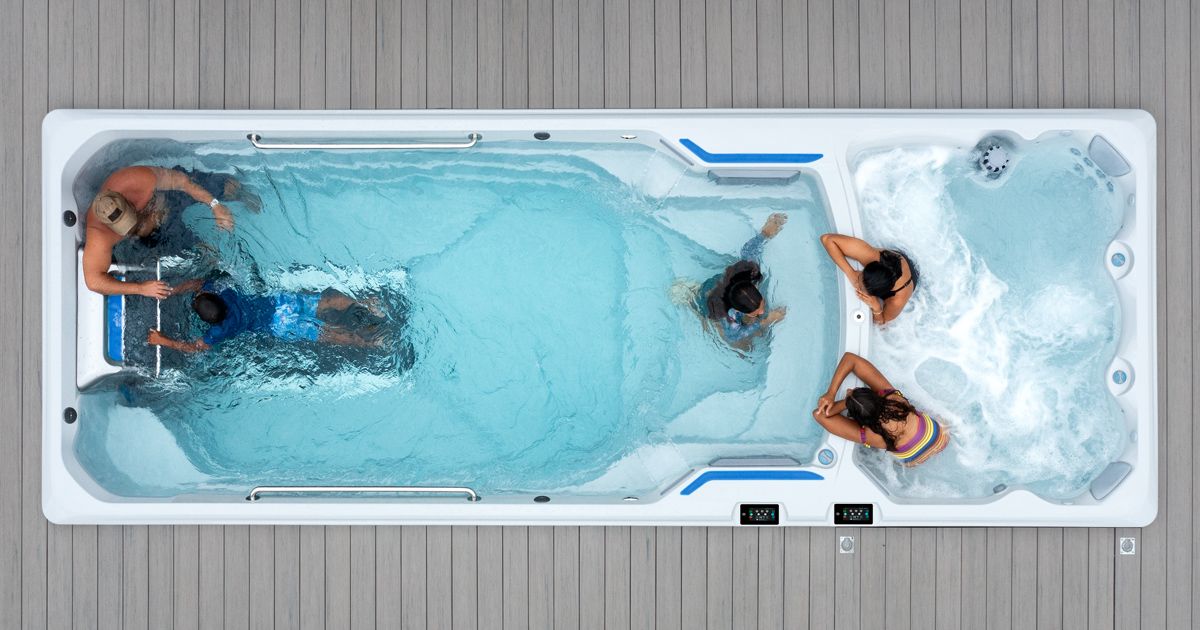
The dual-zone question is the most consequential configuration choice in a swim spa after propulsion, and it is the one dealers push hardest. It is also the most expensive upgrade in the category. Here is what the data actually shows.
What Is a Dual-Zone Swim Spa?
A dual-zone swim spa divides the shell into two separate bodies of water with independent heaters and controls: a swim and exercise zone, and a warm-water spa zone. You can swim at 80–85°F while others soak at 100–104°F, at the same time, in the same unit.
A single-zone model maintains one temperature throughout. You can still swim and soak in it — you just have to pick a compromise temperature, or change the setpoint and wait several hours for the water to catch up.
The Real Cost Difference
The commonly repeated figure is that dual-zone runs "30 to 50% more." Our catalog data puts it near the top of that range and higher in absolute terms than most buyers expect.
| Single-Zone | Dual-Zone | |
|---|---|---|
| Models with published MSRP | 42 | 19 |
| Average MSRP | $39,850 | $58,094 |
| Price range | $24,599 – $67,999 | $40,699 – $73,190 |
That is a gap of roughly $18,000, or about 46% on average. Just as importantly, there is effectively no entry-level dual-zone market: the cheapest dual-zone model in our catalog costs more than the average single-zone unit. If your budget ceiling is under $40,000, the decision is already made for you.
Operating Cost and Maintenance
Two zones means two heaters, additional pumps, and a more complex control system. In practice:
- Energy. Running a spa zone at 102°F year-round alongside a swim zone at 85°F typically pushes monthly electricity to the high end of the $60–$150 range, and above it in cold climates.
- Maintenance. More equipment means more failure points and more parts outside warranty in years four and up. Check the equipment-and-labor warranty term specifically, not the shell term.
- Water care. Two separate volumes to balance, test, and drain rather than one.
Space and Swim Length
The spa zone consumes shell length. A 19-foot dual-zone unit does not give you 19 feet of swimming — it gives you roughly 13 to 15 feet of swim lane and a 4-to-6-foot spa. Compare the Hydropool Executive Trainer 19EX (220", single zone, essentially all swim lane, two seats) with a dual-zone unit of the same overall length carrying five or more seats. Same footprint in the yard, meaningfully different swim.
If your yard limits you to 16 feet or less, dual-zone will compromise the swim lane to the point where serious training becomes difficult.
When Dual-Zone Is Worth It
- Multiple household members want to use the unit at once, at different temperatures.
- Hydrotherapy and family relaxation matter as much as fitness.
- You have room for 19 feet or more, so the swim lane stays usable.
- Your budget comfortably clears $50,000 with delivery and site work included.
When Single-Zone Is the Better Buy
- Swimming performance is the priority — put the $18,000 into propulsion and length instead.
- You are the primary user, or everyone swims at similar times.
- Yard space caps you under about 18 feet.
- You want lower operating cost and fewer things to service.
A Practical Middle Path
Some buyers get most of the benefit by running a single-zone unit at 88–90°F year-round — warm enough for comfortable soaking, cool enough for moderate exercise — and pairing it with a separate hot tub if true 104°F therapy matters. Two units often cost less than one premium dual-zone swim spa, and each does its job better.
Compare configurations directly using our swim spa comparison tool, browse the full catalog, or read Swim Spa Pricing Explained for the complete cost picture.
Pricing reflects manufacturer MSRP data in the Hot Tub Hunt catalog as of August 2026, across 200 swim spa models from 24 brands.