
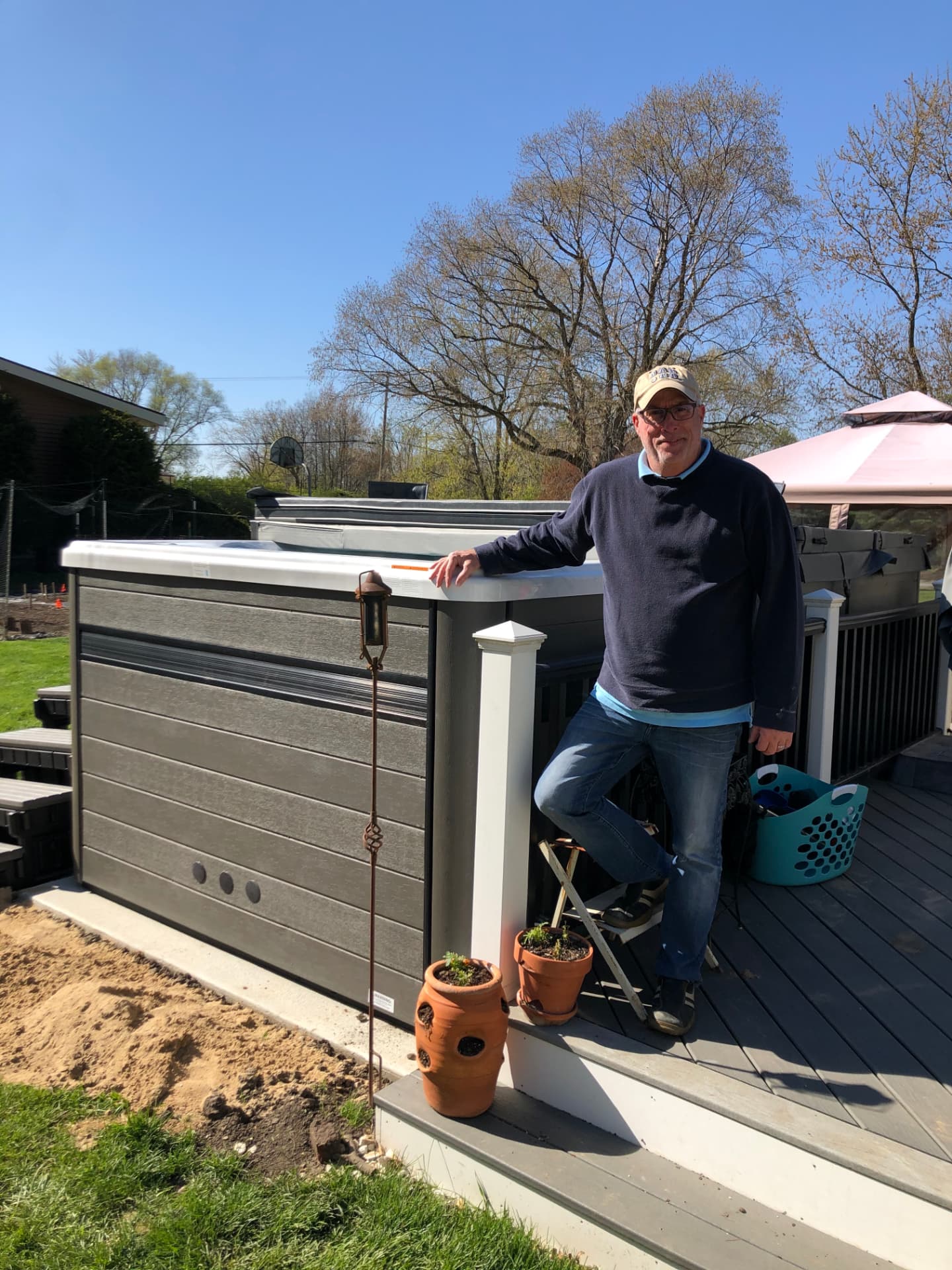
A swim spa is one of the largest backyard purchases most people ever make, and it is also one of the least transparent. Sticker prices are rarely published, dealers quote "packages" rather than models, and most of the pricing you find online is badly out of date. This guide uses our own catalog data — 200 published swim spa models from 24 brands — so the numbers here reflect what these units actually list for today.
What Is a Swim Spa?
A swim spa is a hybrid between a warm-water spa and a swimming pool. It generates a continuous current that lets you swim, run, or row in place, while also offering seating and therapy jets. Unlike a pool, it is a self-contained, insulated, above-ground vessel that holds temperature year-round, which is why swim spas are common in climates where a pool sits closed for six months of the year.
Most units fall between 12 and 21 feet long, hold 1,500 to 3,500 gallons, and weigh 3,000 to 9,000 pounds filled. That size difference — a 12-foot compact versus a 21-foot dual-zone — is the single biggest driver of price.
Propulsion: The Decision That Defines Your Swim
Everything else on a swim spa is a comfort feature. Propulsion is the product. There are three approaches on the market.
Jetted (Air-Induction)
Multiple high-output jets push water down the length of the shell. Air-induction jets mix air into the stream, which increases the perceived force but adds turbulence and bubbles. This is by far the most common system in our catalog and dominates the entry and mid tiers. It is perfectly good for aquatic exercise, resistance walking, and casual swimming. Competitive swimmers tend to find the current narrow and choppy.
Jetted (Airless)
The same jet concept, but without air injection — the stream is denser, smoother, and holds a straighter line. Hydropool's Executive Trainer series and SwimLife's DualStream SwimExpert use this approach and sit in the upper price bands for good reason: the swim quality is a real step up without the cost of a propeller.
Propeller
A large, slow-turning underwater propeller behind a grille creates a wide, laminar, deep current that feels like open water. Endless Pools built the category around this design, and its E-series models are the reference point for serious swimmers. Expect to pay for it: propeller models in our catalog average around $61,000.
If you swim for sport, budget for airless or propeller propulsion first and treat everything else as negotiable. If you want family fitness, hydrotherapy, and pool-substitute use, a good air-induction system saves you $15,000 or more.
What Swim Spas Actually Cost
Across the 61 models in our catalog with published MSRP, prices run from $24,599 to $73,190, with a median around $45,800. Half the market sits between roughly $32,000 and $55,600. Anyone quoting you a "$15,000 swim spa" is either describing a used unit, a very small exercise spa, or a price from a decade ago.
Compact / Entry — roughly $24,000 to $32,000
Twelve to fourteen feet, single zone, air-induction jets, basic controls. Catalina's 12.6 Newporter ($24,599), Wellis Elba Deluxe ($25,999), Endless Pools R200 ($25,999), and SwimLife PlayStream ($26,195) anchor this tier. These fit tight yards and smaller budgets, and they deliver genuine resistance exercise — just not a lap-swimmer's current.
Family / Mid — roughly $32,000 to $52,000
Fifteen to eighteen feet, better insulation, stronger pump packages, more seating, often a wider swim lane. This is where most buyers land and where our catalog median falls. Models rated for recreational swimming average about $46,700.
Performance / Premium — roughly $52,000 to $73,000
Nineteen to twenty-three feet, dual zones or a dedicated performance swim lane, airless or propeller propulsion, premium cabinetry and cover systems. The Endless Pools E2000 ($72,499), Passion Energy Deep ($73,190), and Hydropool AquaTrainer 19 DTAX ($67,999) sit at the top of the range.
For a deeper breakdown of what drives each of these numbers, see Swim Spa Pricing Explained.
Single-Zone vs Dual-Zone
A dual-zone unit splits the shell into a swim area and a separate warm-water spa with independent temperature control. In our catalog the price gap is large and measurable: dual-zone models average about $58,100 against $39,900 for single-zone — roughly 45% more. You also add a second heater and control system to maintain. If both fitness and family soaking matter equally, it is worth it. If swimming is the point, put that money into propulsion and length instead. We cover the tradeoff in detail in Dual-Zone vs Single-Zone Swim Spas.
Sizing and Space
Measure three things before you shop: the pad footprint, the clearance around all four sides for service access, and the delivery route. A 19-foot shell is typically about 92 inches wide and 53 inches tall — it will not go through a standard gate, and most installations require a crane or a specialized trailer. Plan on at least 24 to 36 inches of accessible space on the equipment side.
Longer is better for swimming, but the practical constraint is usually the yard. If you are limited to under 15 feet, prioritize current quality over length; a strong airless current in a 14-foot shell swims better than a weak jetted current in an 18-foot one.
Running Costs
Budget $60 to $150 per month in electricity depending on climate, insulation quality, cover condition, and set temperature. A dual-zone unit run at swim temperature on one side and spa temperature on the other lands at the high end. Full-foam insulation and a tight, well-maintained cover matter more to your bill than any efficiency badge on the brochure. Add roughly $300 to $600 a year for chemicals and filters.
Warranty: Read the Three Numbers
Every warranty is really three warranties, and manufacturers publish them together to blur the difference.
- Shell structure — how long the fiberglass or acrylic body is covered. Longest and least likely to be used.
- Surface — blistering and delamination of the finish. Typically shorter.
- Equipment and labor — pumps, heaters, controllers, and the cost of a technician's time. This is the number that determines what a repair costs you in year four, and it is usually the shortest term in the document.
Ask for the equipment and labor terms in writing, and ask whether labor is covered for the full term or only the first year or two.
Questions to Ask Before You Sign
- What is the model's MSRP, and what is this quote's discount off it?
- Is propulsion air-induction, airless, or propeller — and can I swim in it before buying?
- Does the price include delivery, crane, and startup, or are those separate line items?
- What are the equipment and labor warranty terms specifically?
- What is the estimated monthly operating cost in my climate?
- Who services it, and what is the current lead time for a service call?
Next Steps
Start by narrowing on propulsion and length, then compare real numbers. You can compare swim spa models side by side, browse the full swim spa catalog and brand directory, or help other buyers by submitting the price you paid.
Pricing reflects manufacturer MSRP data in the HotTubHunt catalog as of August 2026, across 200 swim spa models from 24 brands. Dealer pricing varies by region and promotion.